
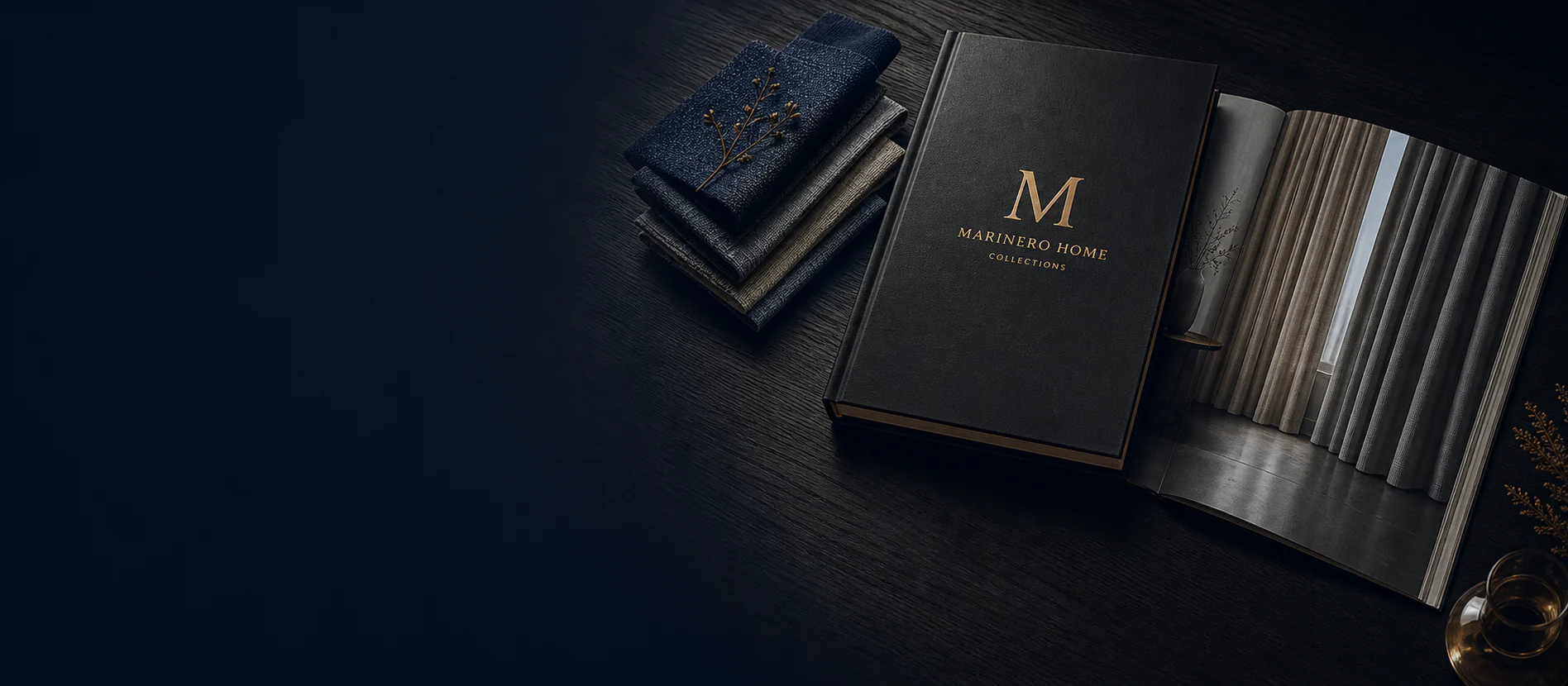
A swatch card shows sheer colour and surface in small cuttings. A sample is a larger piece for drape and transparency at the window. An export order locks meters after card selection and sample approval. Trusting screen colour is the most common sheer mistake.
What is the difference between a swatch card and a sample?
| Tool | Size | What it shows | What it hides |
|---|---|---|---|
| Swatch card / kartela | Small cuttings | Colour family, surface | True drape and fullness |
| Meter sample | Larger piece | Transparency, fall, light | The full colour stock |
| Digital catalog | PDF / e-catalog | Collection names, mood | True colour |
How the swatch and sample process works
- Request: company name, country, sheer group (voile, batiste, sable, thick & thin), and project type.
- Catalog access: a digital-archive password can be requested by email; guide pages stay open.
- Card: sent for colour narrowing, or handed over at a fair.
- Sample: one or two lock colours viewed at the glass in daylight. FR projects may need a separate lab cutting.
- Approval note: colour code, width, finish, and quantity locked by email.
- Production and shipment: shade changes outside the agreed tolerance are refused.
Three rules when reading a sheer sample
- View it in daylight, in front of the glass. Showroom spots make sheers look more opaque.
- Photograph two scenarios: with and without drapery behind.
- Note the same fullness ratio. Tight gathering drops transparency and misleads the choice.
Ayhan Denizci’s contact form keeps a separate “Sample & swatch request” tab. That is why it asks for project type (hotel, residential dealer, wholesale, architect) and collection interest: the wrong set wastes both time and the colour decision.
What must lock in the approval email
“This colour works” is not an order. The approval email should carry at least quality code, colour name or number, width, weight, finish (FR / Teflon / none), target meters, and a fullness note. A photo helps; light still lies. The physical cutting is the reference. Ayhan Denizci runs production to that locked code. Asking later for “a slightly broken white” means a new sample.
On a repeat order the previous approved roll is the reference. Cards age, screens drift, and a new-season PDF does not hold last year’s roll. If a grey-scale tolerance was never written, the buyer can refuse. That is why one meter from the first shipment should go into an archive — at the dealer and at the mill.
- Card: narrows the palette; it does not lock the order.
- Meter sample: for drape and transparency.
- FR cutting: for the lab; do not mix it with the aesthetic sample.
- Approval note: code, width, finish, quantity, date.
Frequently asked questions
Are swatch cards free?
Terms depend on buyer profile, country, and set size. For commercial buyers a card is often a development cost; freight is discussed separately. Writing a clear request on the form is the fastest path.
Can we order from PDF only?
Not recommended for sheers. A PDF introduces the collection; transparency and shade cannot lock without a physical cutting. Repeats use the previously approved roll as reference.
How long does sampling take?
Stock cards can move in days. Special colour or FR cuttings add lab time. Put a target date on the request; fair weeks can stretch the calendar.
What if the roll does not match the card?
If the approval note has no tolerance, the buyer can refuse. That is why sample approval must sit in the email record. Production follows the locked code.
Do we need the full card for one colour?
No. If project type and sheer group are written, the mill cuts a narrow set. “Send everything” inflates freight and decision time. That is why the form asks for collection interest.
Can colour change after sample approval?
Production follows the locked code. A change request is a new sample and a new date. A spoken “a shade lighter” is not a mill measurement.