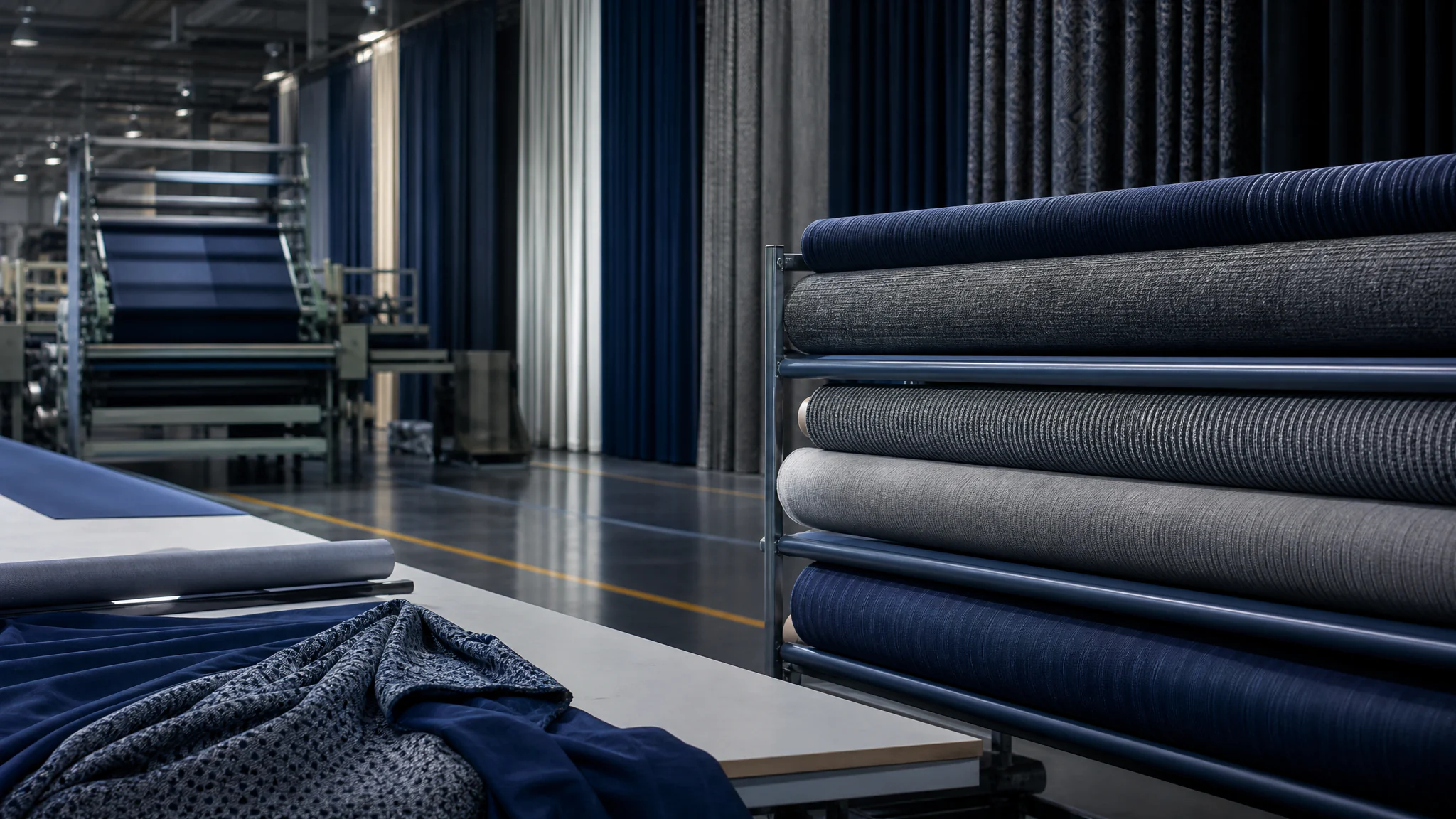

Sheer curtain fabric is a transparent textile that lets daylight in while softening the view outside. Voile and batiste sit in front of drapery in homes, hotels, and contract jobs. Production runs through yarn selection, weaving, finishing, and meter inspection before export.
What is sheer curtain fabric?
Sheer curtain fabric — voile in many buying offices, tül perde in Turkish mills — is a fine home-textile cloth with high light transmission. Unlike blackout or heavy drapery it does not darken the room; it diffuses daylight, blurs silhouettes, and keeps the space open. In Turkey, “tül” names both the cloth family and the inner window layer.
Ayhan Denizci Tekstil has woven this family under the Marinero Home brand since 2006. The collection focus is sheers. Dealers, hotel projects, and wholesale buyers specify different weights, finishes, and widths inside the same family.
Where are sheer curtains used?
- Homes: daylight in living rooms and bedrooms without a full blackout.
- Hotels and public buildings: soft light on large façades, often with FR options.
- Showrooms and offices: a transparent layer that does not hide the brand behind the glass.
- Export programmes: stocked voile in standard window widths for Europe, the Middle East, Africa, and Asia.
How is sheer curtain fabric made?
A reliable sheer passes four stages before final inspection. Ayhan Denizci’s Bursa process keeps that order: yarn, weaving, design/finish, then width and shipment checks.
- Yarn selection: polyester filament is common in voile; hand, lustre, and shrinkage are locked here. An OEKO-TEX Standard 100 request reaches the yarn lot.
- Weaving: warp and weft density set light transmission and drape. Voile reads more open; batiste reads tighter.
- Design and finishing: plain grounds, thick-and-thin rhythm, or a matte sable look take character here. FR, Teflon water-repellent, or softening finishes follow the project spec.
- Quality control: width, weight, shade, and fault meters are recorded. Export rolls follow the buyer’s label and pack standard.
Quality is not a target. It is a promise we give again every day.
Ayhan Denizci, founder
Sheer curtains vs drapery: what is the difference?
| Measure | Sheer / voile | Drapery / blackout |
|---|---|---|
| Light | High transmission, room stays bright | Low transmission or full blackout |
| Position | Layer closest to the glass | Behind the sheer, or alone |
| Hand | Fine, transparent, soft drape | Heavier, covering, more volume |
| Contract note | FR sheers are common on hotel glass | Blackout for guest rooms and screening |
Most homes and hotels run two layers. The sheer manages daylight; drapery closes privacy and adds weight at night. Marinero Home collections focus on the sheer layer.
What to check when choosing a sheer manufacturer
For a B2B buyer the right mill is repeatable quality, lead time, and papers — not the lowest meter price alone. Ayhan Denizci treats quality, delivery, and price as one set. Shade between card and roll, width tolerance, and the date on an FR report belong on the first checklist.
Why width, weight, and fullness must be written down
A meter price for sheer fabric says almost nothing on its own. The same voile name at 300 cm and 280 cm yields different make-up; weight changes light and drape. Fullness (1:2 or 1:2.5) drops transparency a second time: a tightly gathered sheer looks more opaque than the open card. Quotes without width, weight, colour, and fullness cannot be compared.
In a dealer or project office the practical order is glass height and cloth width first, colour second. Width sets cutting waste. A narrow quality on a tall window needs a seam, and on a sheer that seam shows in daylight every day. Ask for width options on Marinero Home groups at the start; “same cloth, other width” is not always on the shelf.
What to bring to the first mill conversation
- Target market and customer type: residential dealer, hotel, wholesale, architect.
- Look: high light, matte surface, or rhythmic texture.
- Papers: OEKO-TEX, REACH, FR test code — or write “standard home use”.
- Target meters or a first trial; one colour or a palette.
- Label language, roll diameter, and pack expectation.
Without that list the mill either assumes the widest (and dearest) spec or offers residential stock. Both waste a week. Ayhan Denizci’s form asks for project type and collection interest for this reason: the sheer family is broad, and the wrong set spoils both colour and FR decisions in transit.
Takeaway
Sheer curtain fabric dresses a window without shutting out the day. Production is a measurable path from yarn to shipment. Voile, batiste, sable, and thick & thin are compared in the next guide; a physical sample is still the shortest way to stop guessing.
Frequently asked questions
Is voile the same as sheer curtain fabric?
Voile is a type of sheer. Not every sheer is voile. Voile is more open with a soft fall. Batiste is tighter, sable is more matte, and thick & thin is defined by yarn rhythm. Marinero Home offers all four inside the sheer family.
What is the difference between a mill and a make-up workshop?
A mill weaves and exports fabric by the meter. A workshop cuts and sews it to the window. Ayhan Denizci is a fabric manufacturer and exporter; dealers or project teams finish make-up in their market.
Which documents are asked for when exporting sheers?
It depends on the market. Europe often asks for REACH and OEKO-TEX Standard 100. Hotels and public jobs add an FR test report. Pack, label, and origin papers should be fixed on the order confirmation.
Are sheer curtains hard to care for?
Most polyester voiles wash at low heat or go to professional cleaning. FR or Teflon finishes change the care label. The care note should travel with the cloth on contract jobs.
Why does width come up so often on sheers?
A seam on transparent cloth shows in the light. A narrow width on a tall glass means a join. If width is missing from the quote, the meter price misleads: the same quality wastes differently at different widths.
Which sheer group should a first order start with?
Residential and general export stock usually starts with voile or batiste. Add sable for a matte look, thick & thin for rhythm. FR and custom colour sit on top of the stock group and are planned separately.